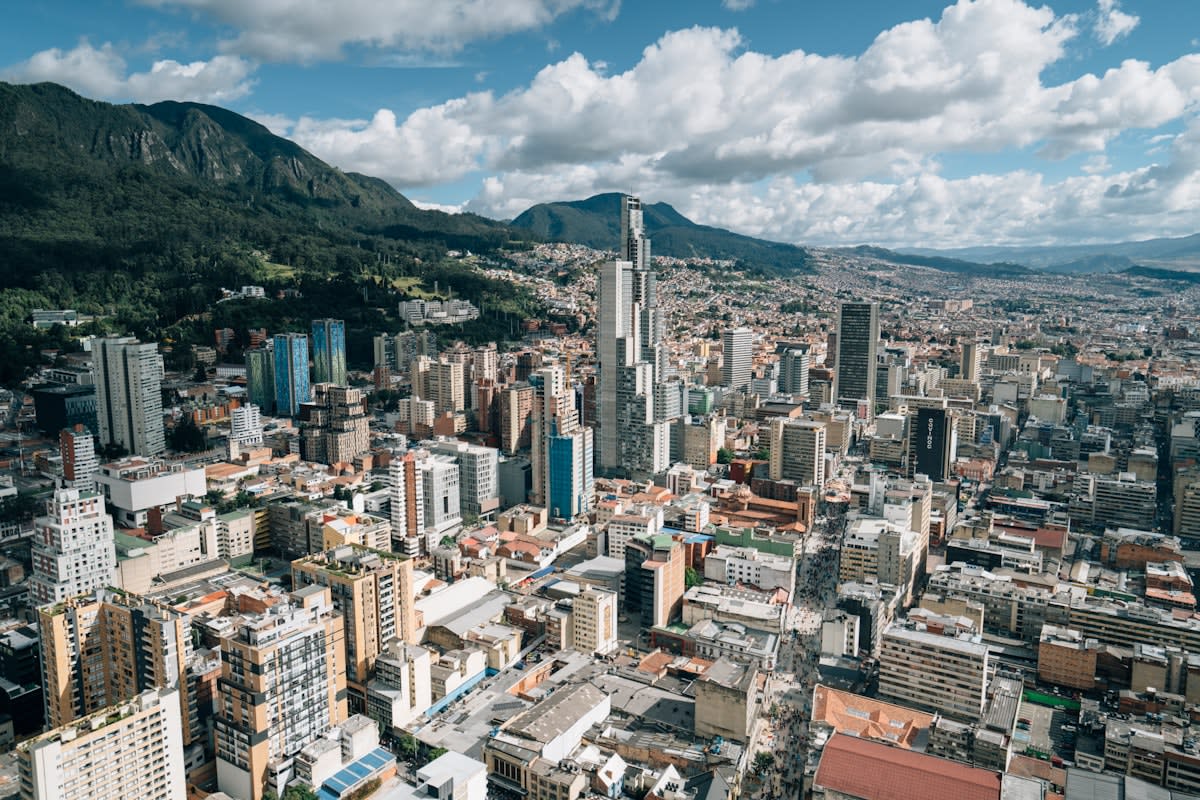
The traditional museum model rests on a dangerous fallacy: that physical possession equals permanent preservation. In Latin America, this assumption is currently colliding with a volatile environmental reality. As governments in Bogota, Colombia, and across the region mobilize firefighters and activate contingency plans to counter the strengthening El Nino, the fragility of physical archives has become an operational crisis. Drought, extreme heat, and flooding are not merely weather events; they are systemic threats to the material integrity of cultural assets. When the environment becomes a predator, the act of holding a physical object transforms from a mark of prestige into a significant liability.
Why cling to a physical object that can be erased by a single flood or a spike in humidity? The risk is no longer theoretical. The current mobilization of water, energy, and transportation systems across Latin America to prepare for climate-related disruptions highlights a broader truth: physical infrastructure is failing to keep pace with environmental acceleration. For museums, this means that the cost of insuring, climate-controlling, and physically securing an artifact often outweighs the intellectual value of the object itself. The strategic response is not better air conditioning, but a fundamental decoupling of the object from its provenance.
To solve this, cultural institutions are looking toward an unlikely source: the aerospace and defense sector. The methodology of digital twins and digital threads, currently used to accelerate mission development in autonomous systems and drones, provides a blueprint for cultural survival. In aerospace, a digital twin is not just a 3D model; it is a living record that connects software, electrical, electronics, and mechanical engineering to reduce program risk. When applied to art, the digital twin becomes the primary asset, while the physical object becomes a secondary, redundant backup. The value migrates from the atom to the bit.
This is not about digitization for the sake of access; it is about the operationalization of provenance. By establishing a digital thread—a seamless flow of data that tracks an object's history, chemical composition, and ownership across its entire lifecycle—museums can maintain the integrity of an asset even if the physical version is lost to a climate catastrophe. This approach mirrors the aerospace industry's drive to deliver mission-ready capabilities in dynamic operational environments. In this context, a museum's mission is the preservation of truth, and the digital thread is the only tool capable of ensuring that truth survives a flood in Bogota.
The Redundancy Logic
The shift from physical ownership to digital provenance is a risk-mitigation strategy. If the physical object is the only source of truth, the system has a single point of failure. A digital thread distributes that truth across a verifiable network.
Does the loss of physical ownership diminish the cultural value of the work? The contrarian view suggests it actually enhances it. When provenance is digitized and decoupled, the asset is no longer hostage to a specific geography or a failing government's contingency plan. It becomes a global utility. The CAPA Airline Leader Summit's focus on Latin America and the Caribbean reflects a broader regional trend toward integrating high-tech, software-defined capabilities into legacy systems. Museums are simply applying this same logic to the arts, trading the burden of custody for the precision of digital provenance.
| Metric | Physical Ownership Model | Digital Provenance Model |
|---|---|---|
| Risk Profile | High (Vulnerable to El Nino/Floods) | Low (Distributed Data Integrity) |
| Maintenance Cost | Exponential (Climate Control/Security) | Linear (Cloud Storage/Verification) |
| Verification Speed | Slow (Physical Inspection/Audit) | Instant (Digital Thread Query) |
| Asset Agility | Static (Geographically Bound) | Dynamic (Global Accessibility) |
The transition requires a mental leap: viewing the museum not as a warehouse of things, but as a manager of information. The aerospace industry's ability to reduce program risk through digital integration is the exact mechanism museums now require. By treating a painting or a sculpture as a 'mission' rather than a 'possession,' institutions can focus on the delivery of cultural knowledge. This removes the anxiety of the physical—the fear of the drought, the heat, and the inevitable decay of matter.
We must ask why we still prioritize the physical shell over the historical essence. If a digital thread can prove an object's origin, its changes over time, and its cultural significance with absolute precision, the physical object becomes a luxury, not a necessity. This is the logic of the software-defined era. Just as drones are becoming software-defined capabilities, cultural heritage is becoming a software-defined record. The physical object is merely the hardware that originally ran the program.

The urgency is driven by the failure of forecast-to-action pipelines. As noted in reports regarding Latin American government responses to El Nino, there is often a struggle to turn meteorological warnings into effective preparedness. Museums cannot afford this lag. While governments struggle to protect water and energy systems, museums are taking a more radical path: they are removing the target. By shifting the center of value to digital provenance, they make the physical destruction of an object a tragedy of matter, but not a tragedy of history.
This systemic evolution is a mirror of the broader regional drive toward agility. The integration of autonomous systems in the aerospace sector is not an isolated event; it is part of a wider movement toward reducing friction in complex environments. Cultural institutions in Latin America are realizing that the friction of physical ownership—the bureaucracy of loans, the terror of theft, the fragility of the archive—is a barrier to their actual purpose. Digital provenance is the lubricant that allows culture to flow without the weight of the object.
Ultimately, the trade is simple. Museums are exchanging the illusion of control for the reality of permanence. In a world where Bogota must prepare for extreme heat and flooding, the only safe place for a masterpiece is in a digital thread that exists everywhere and nowhere at once. The age of the curator as a guard is ending; the age of the curator as a data architect has begun.