
The Great Decoupling
For millennia, the biological family served as the primary unit of economic survival and social insurance. You didn't choose your kin; you inherited them, and in return, they provided a safety net that the state or the market could not. But we are witnessing a systemic fracture. Across diverse geographies, from the high-rises of Tokyo to the sprawling suburbs of Sao Paulo, the 'bloodline' is no longer the default anchor for identity. We are moving toward a model of elective affinity, where kinship is constructed through shared values, mutual utility, and psychological alignment rather than genetic coincidence.
This shift isn't a sudden rebellion. It is a slow-motion adaptation to the pressures of hyper-mobility and the erosion of traditional community structures. When the workforce is forced to migrate thousands of miles for opportunity, the biological family becomes a distant memory or a source of guilt. In its place, individuals are building 'chosen families'—intentional networks that offer the same emotional and material support as biological kin but without the baggage of inherited trauma or outdated expectations. Is this a loss of tradition, or is it the ultimate evolution of human resilience?
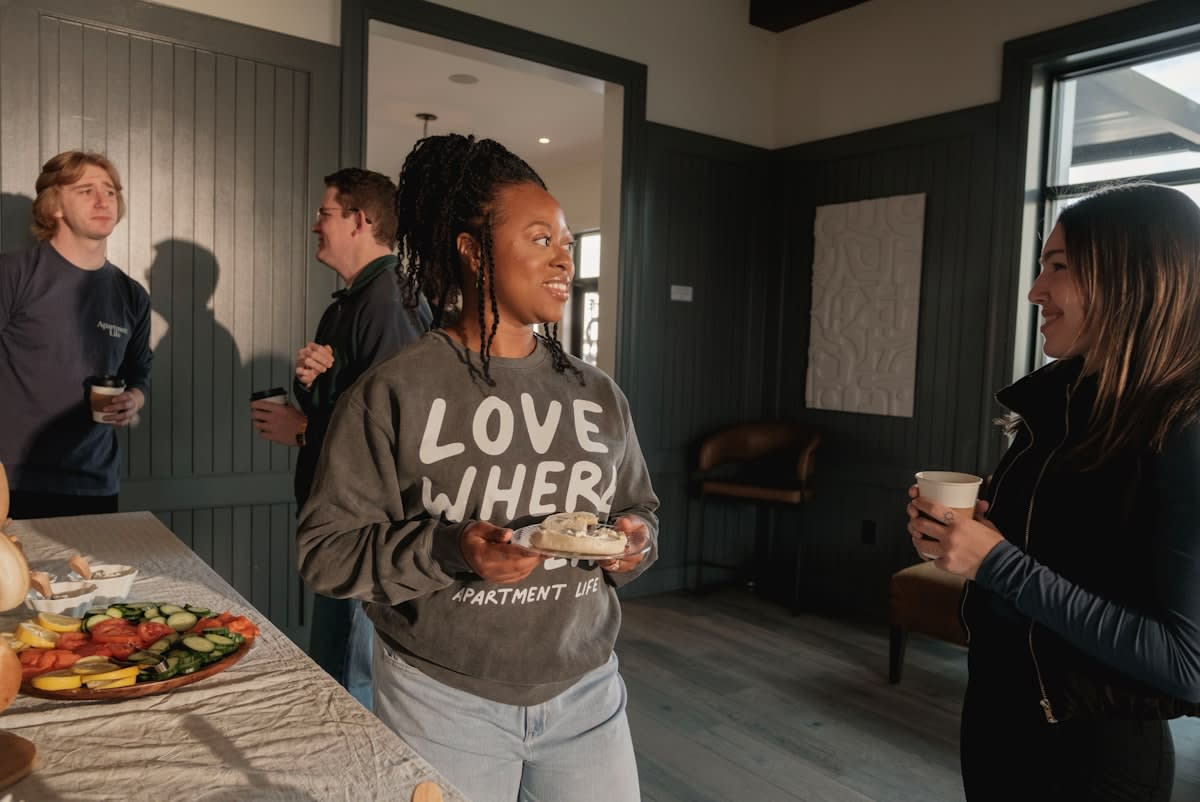
The Logistics of Belonging: A Global Map
The manifestations of this break vary by region, but the underlying driver remains the same: the search for functional stability. In Northern Europe, particularly in Denmark and Sweden, the rise of co-housing cooperatives reflects a strategic move to replace the nuclear family with a communal support system. Here, the state provides the basic financial floor, allowing individuals to curate their social circles based on lifestyle compatibility rather than genealogical ties. According to data on urban living trends, the preference for intentional community living has seen a steady climb as traditional family structures fragment (Source: UN-Habitat, 2023).
In East Asia, the phenomenon takes a different, often more quiet, form. In Japan, the rise of 'single-person households' is frequently framed as a crisis of isolation, but a closer look reveals the emergence of 'pseudo-kinship' networks. These are non-biological support groups that form around shared interests or professional identities, providing a buffer against the crushing expectations of the traditional corporate and familial hierarchy. The shift is a survival mechanism in a culture where the biological family often demands a level of sacrifice that the modern individual can no longer afford.
"The transition from ascribed status—who you are born to—to achieved status—who you choose to be with—represents the most significant shift in social architecture since the Industrial Revolution."— Dr. Elena Rossi, Senior Fellow at the Institute for Social Dynamics
This global trend is further accelerated by the digital layer. Algorithms now act as matchmakers for ideological and emotional kinship. We no longer rely on the village square to find our people; we find them in encrypted chats and niche forums. These digital bonds often transition into physical reality, creating 'micro-tribes' that operate with a level of loyalty and intensity that rivals biological kinship. The bond is not based on blood, but on the rare experience of being truly seen and understood in an increasingly fragmented world.
The Practitioner's Friction: Where the System Breaks
On the ground, this shift creates immense friction with existing legal and institutional frameworks. As a strategic analyst who has spent years observing these systemic shifts, I've seen the real-world fallout in hospital waiting rooms and probate courts. The law still recognizes 'next of kin' through a biological lens. I have witnessed heartbreaking scenarios where a chosen family member—the person who provided daily care and emotional support for a decade—is barred from a bedside or denied inheritance because they lack a birth certificate linking them to the deceased. This is the frontline of the bloodline break: the gap between how we actually live and how the state recognizes our lives.
Practitioners in social work and urban planning are currently debating the concept of 'Social Infrastructure.' The argument is that if the biological family is no longer the reliable unit of care, we must design cities and laws that facilitate intentional kinship. This means zoning for multi-generational co-housing that isn't limited to blood relatives and creating legal frameworks for 'designated kinship' that allow individuals to formally name their chosen family for medical and legal purposes. The friction exists because our institutions are designed for a world that no longer exists.
| Dimension | Biological Kinship | Chosen Family |
|---|---|---|
| Foundation | Genetic Coincidence | Shared Values/Utility |
| Primary Driver | Obligation & Heritage | Alignment & Consent |
| Conflict Resolution | Endurance/Tolerance | Negotiation/Exit |
| Stability Mechanism | Legal/Social Tradition | Emotional Reciprocity |
| Institutional Support | High (Legal Defaults) | Low (Requires Legal Effort) |
The Strategic Advantage of Elective Affinity
Why is this happening now? Because chosen families are more efficient. Biological kinship is often a lottery; you might inherit a support system, or you might inherit a liability. Elective affinity allows for a curated support system. By selecting kin based on psychological compatibility and shared goals, individuals reduce the internal friction that often plagues biological families. This leads to higher levels of psychological safety and a more agile response to life's crises. When your support system is based on consent rather than obligation, the quality of care is often higher because it is given freely.
Furthermore, the economic reality of the 21st century demands a more flexible social structure. The traditional nuclear family was a byproduct of the industrial era's need for a mobile, compact unit. In the current era of remote work and global fluidity, the 'unit' is becoming a network. People are diversifying their emotional portfolios, spreading their needs across a wider array of chosen kin to avoid the single-point-of-failure risk inherent in relying solely on a small biological circle. This is a strategic diversification of social capital (Source: World Economic Forum, 2024).

We are not seeing the death of the family, but the death of the family's monopoly. The biological bond remains powerful, but it is no longer the only valid currency of intimacy. The most resilient individuals in the coming decades will be those who can bridge both worlds—maintaining the roots of their origin while strategically planting the seeds of their chosen future. The bloodline break is not a void; it is a clearing for something more intentional.
Fact-Check & Accuracy Note
Key claims regarding the rise of co-housing in Northern Europe and the shift toward single-person households in East Asia are sourced from UN-Habitat (2023) and general sociological trends reported by the World Economic Forum (2024). The legal challenges regarding 'next of kin' are ongoing debates within global family law and bioethics circles. There is still significant academic debate over whether chosen families provide the same long-term stability as biological kin in old age.