40 years ago AUGUST 21, 1986: New 20-point plan
Source Entity
The Indian Express
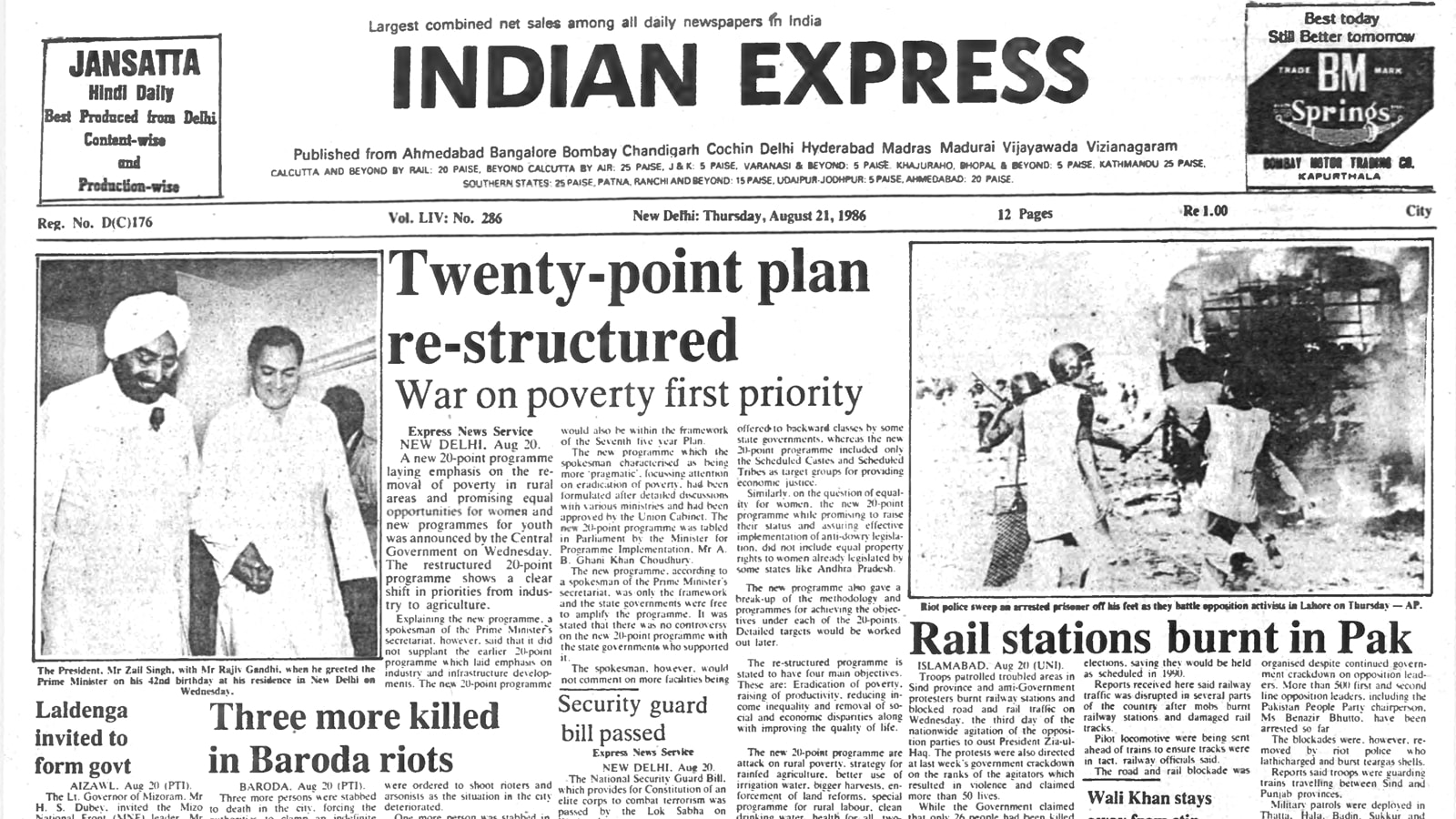
On August 21, 1986, the Indian government launched a restructured 20-point programme prioritizing rural poverty alleviation. Simultaneously, Pakistan faced violent anti-government protests, while President Reagan maintained pressure on the Nicaraguan government to adopt democratic reforms.
The Global Landscape of August 1986: A Retrospective Analysis
On August 21, 1986, the geopolitical landscape was marked by significant internal developments in India, volatile civil unrest in Pakistan, and the ongoing ideological struggle in Central America. These disparate events underscore a period of intense global transition, where domestic policy shifts and regional instability shaped the trajectory of the late 20th century.
India’s Pivot: The Restructured 20-Point Programme
The Indian Central Government’s announcement of a new 20-point programme represented a strategic recalibration of national priorities. By shifting the focus from industrial expansion toward the eradication of rural poverty, the administration signaled an acknowledgment of the agrarian crisis. This policy change was specifically designed to foster socio-economic upliftment for women and youth, acknowledging these demographics as essential pillars for long-term national development. This move was not merely economic but a structural attempt to stabilize the rural base that had been marginalized during previous industrial-heavy cycles.
Civil Unrest in Pakistan: The Anti-Zia Movement
Simultaneously, Pakistan was grappling with severe political instability as opposition parties launched a nationwide agitation against the military regime of President Zia-ul-Haq. The intensity of the protests, which saw railway stations burned and critical transport infrastructure blocked in the Sindh province, highlighted the deep-seated grievances against the government's authoritarian grip. The deployment of troops to suppress the uprising followed a violent crackdown that had already claimed over 50 lives, illustrating the explosive nature of the political climate during the mid-1980s.
The Reagan Doctrine and Nicaragua
In the Western Hemisphere, the geopolitical tension was defined by the Reagan administration’s firm stance on Nicaragua. President Ronald Reagan’s insistence that the Nicaraguan government move toward democracy reflected the broader Cold War strategy of the United States. This period was characterized by the 'Reagan Doctrine,' which aimed to challenge Soviet influence in the Americas by supporting anti-communist movements, putting immense diplomatic and economic pressure on the Sandinista government to reform its political processes.
Synthesis of Global Trends
When viewed collectively, these events reflect a world in flux. India was attempting to manage internal social equity through state planning, while Pakistan was struggling with the consequences of military rule and civil dissent. Meanwhile, the United States was asserting its influence in smaller nations to reshape their political ideologies. These events collectively demonstrate the struggle between centralized control and democratic aspirations that defined the global political discourse of the 1980s.
Looking Forward: The Legacy of 1986
The decisions made in August 1986 had long-lasting implications. India’s focus on rural development would continue to influence its socio-economic policies for decades. The volatility in Pakistan signaled the start of a long, arduous journey toward democratic transition, while the tensions in Nicaragua contributed to the eventual realignment of regional powers in Central America. Analyzing these events provides critical insight into the historical mechanisms that drive national policy and international relations.