'To what extent can English…': SC questions use of term ‘native’ in CBSE's three-language policy
Source Entity
Latest News: Todays Latest News Headlines from India & World | Hindustan Times | Hindustan Times
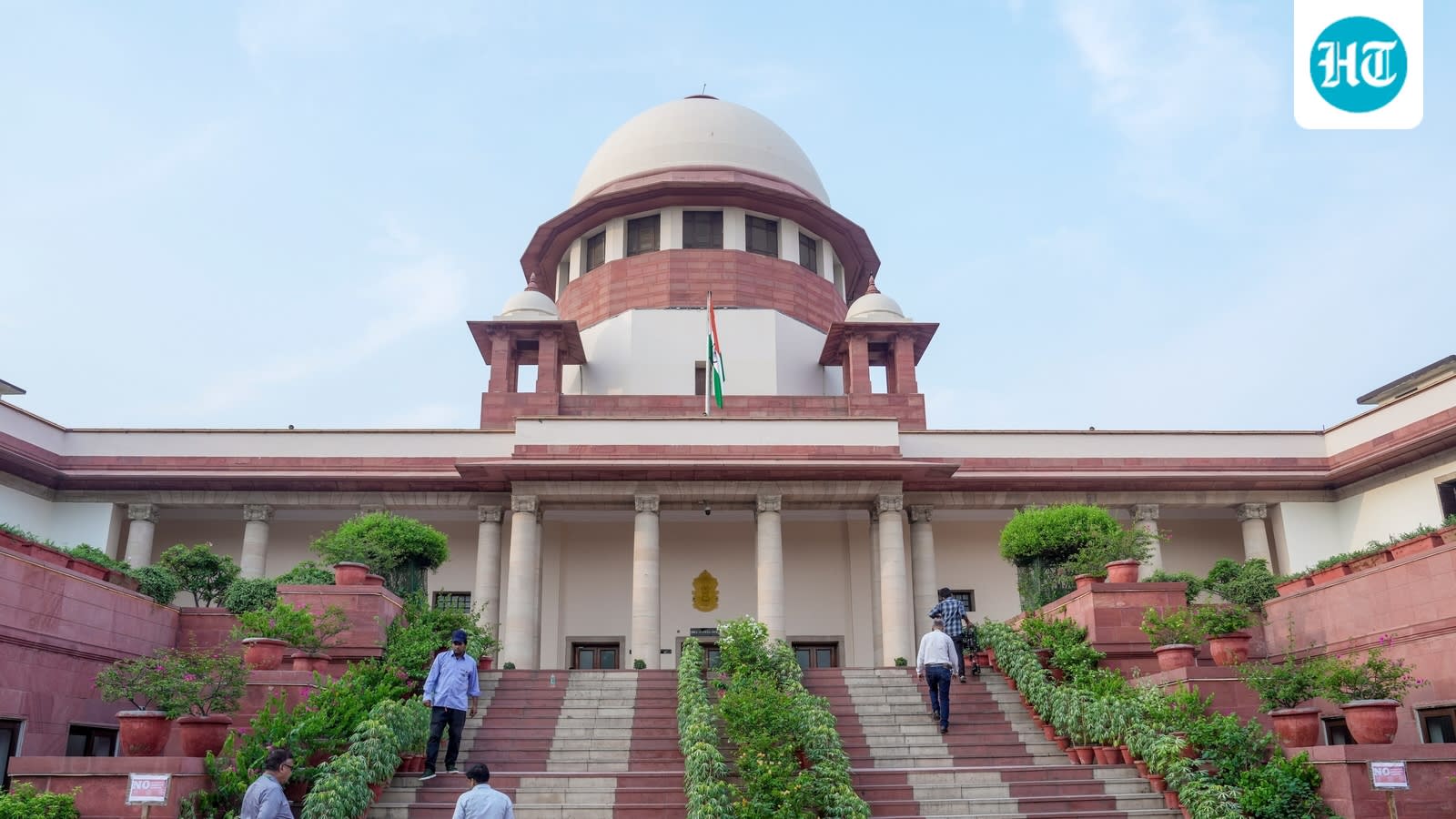
The Supreme Court has directed the CBSE to consider a one-year reprieve for Class 6 students regarding the three-language policy. The bench also initiated a debate on the colonial connotations of the term 'native' versus 'indigenous' within the NEP 2020 framework.
Supreme Court Scrutinizes NEP 2020 Language Policy and Terminology
The Legal Intervention
The Supreme Court of India has intervened in the implementation of the three-language policy under the National Education Policy (NEP) 2020, specifically concerning students in Class 6. A bench comprising Chief Justice of India (CJI) Surya Kant and Justices Joymalya Bagchi and V. Mohana has directed the Central Board of Secondary Education (CBSE) to consider a one-time reprieve. This request stems from concerns regarding the immediate academic burden on students and the current state of educational infrastructure.
Infrastructure and Implementation Concerns
The court’s primary directive to the CBSE is to evaluate the feasibility of deferring the policy for current Class 6 students to the following academic year. This delay is intended to allow the board to adequately prepare by shoring up teaching staff, course materials, and necessary physical infrastructure. The bench highlighted that without a clear roadmap for resource allocation, the immediate imposition of a third language could adversely affect student outcomes, particularly regarding future board examinations in Class 10.
Deconstructing Linguistic Terminology
A significant portion of the judicial discourse focused on the linguistic framing within the NEP 2020. Justice Joymalya Bagchi raised pointed questions regarding the use of the word 'native,' characterizing it as a term with colonial origins. The bench suggested that 'indigenous' would be the more appropriate and historically sensitive descriptor. This critique reflects a deeper judicial interest in ensuring that national policy documents align with post-colonial sensibilities and precise terminology.
The Status of English in India
Beyond administrative concerns, the Supreme Court has initiated a broader legal debate regarding the status of the English language. The bench is currently tasked with examining whether English should be classified as 'indigenous' or 'non-indigenous' within the Indian context. This debate touches upon the historical evolution of English in India, where it has served as an administrative and academic lingua franca for centuries, and how that status is reconciled with the goal of promoting regional and local languages.
Balancing Educational Goals
The court's inquiry also extends to the pedagogical timeline of the policy. The bench questioned whether the third language should be introduced as early as Class 6, or if a staggered approach starting from Class 3 or 4 would be more effective. By seeking a comprehensive roadmap, the Supreme Court is essentially acting as a safeguard to ensure that the transition to the three-language model does not compromise the quality of education or create unnecessary transitionary hurdles for students currently enrolled in foreign-language combinations.
Implications for Future Policy
This judicial intervention serves as a crucial check on the rapid rollout of educational reforms. By demanding transparency regarding teacher availability and resource readiness, the court is emphasizing that policy implementation must be grounded in operational reality rather than purely theoretical frameworks. The eventual ruling on the status of English and the structural adjustments to the three-language policy will likely set a precedent for how future NEP 2020 initiatives are executed across the country.
Multiple Citing Sources
Verification Required?