The Death of the Lucky Guess
For decades, drug discovery operated as a high-stakes lottery. Scientists would screen thousands of existing molecules, hoping one might accidentally fit into a protein receptor like a key in a lock. This stochastic approach created a brutal attrition rate where most candidates failed in late-stage trials, wasting billions in capital and years of human effort. Why did we accept this inefficiency for so long? The answer lies in the sheer complexity of protein folding, a biological puzzle that remained largely opaque to human intuition and traditional computation.
The current transition represents a fundamental reorganization of how we interact with biology. We are no longer limited to the proteins that evolution happened to produce over millions of years. Instead, generative AI allows researchers to specify a desired function and work backward to the amino acid sequence. This is not merely an incremental improvement in speed; it is a move from discovery to invention. When the target is defined, the molecule is engineered to meet it, effectively removing the 'trial' from trial-and-error medicine.

This shift is most evident in the emergence of physics-based generative AI. Unlike previous models that relied on existing libraries of known chemicals, new platforms use quantum-inspired physics to predict how a novel molecule will behave in a biological environment. This allows for the creation of first-in-class drugs for targets that have almost no existing chemical data. If there is no map, the AI builds one based on the laws of thermodynamics and molecular mechanics, rather than guessing based on previous, unrelated maps.
Engineering the Invisible
The partnership between Aqemia and Sanofi, expanded on July 17, 2026, serves as a primary case study for this transition. By leveraging the Qemi platform, these organizations are targeting difficult, first-in-class projects where traditional chemical data is limited. This approach does not rely on the hope that a similar molecule exists in a database; it uses generative physics to invent a small molecule from scratch. The nomination of new therapeutic targets and subsequent milestone payments indicate that this method is producing viable leads where traditional methods hit a wall.
Parallel to small molecule design, the field of immunology is seeing a similar evolution. On July 16, 2026, Chai Discovery entered into a collaboration with argenx to apply de novo antibody discovery. Antibodies are notoriously difficult to engineer because their efficacy depends on a precise geometric fit with an antigen. By using a computer-aided design suite, researchers can now bypass the traditional process of immunizing animals and screening B-cells, instead designing the antibody's binding site computationally to ensure maximum affinity and specificity.
"Frontier AI models move from research breakthroughs into deployment in real workflows by pioneering pharma companies and biotechs."— Chai Discovery Official Announcement
This operationalization of AI into real-world workflows suggests that the industry has moved past the hype cycle. We are seeing a transition where AI is not a separate 'tool' used by a data science team, but the core engine driving the scientific process. When a company like argenx integrates de novo design into its core immunology research, it is admitting that the old way of discovering antibodies is too slow and too imprecise for the next generation of therapeutics.
The implications extend beyond antibodies and small molecules into the very tools we use to edit the genome. Recent research highlighted in Nature demonstrates that AI can design functional CRISPR enzymes that have never existed in nature. This is a critical development because natural nucleases are constrained by the evolutionary needs of the bacteria they came from. By reverse-engineering the final conformation of a TnpB protein, researchers can now create molecular scissors with properties tailored for human medicine, rather than biological survival.
| Discovery Metric | Traditional Trial-and-Error | Generative Protein Design |
|---|---|---|
| Starting Point | Existing chemical libraries | Desired functional conformation |
| Data Requirement | High reliance on prior experimental data | Physics-based prediction (low initial data) |
| Design Logic | Screening and optimization | De novo synthesis/invention |
| Success Driver | Stochastic probability (Luck) | Computational precision (Engineering) |
| Example Application | Library screening for ligands | AI-designed CRISPR nucleases |
The technical challenge of this transition is immense. As noted by Jennifer Doudna and Soeren Lienkamp of the University of Zurich, nucleases must complete a carefully orchestrated series of steps to function. Evolution produces these through random mutation and selection over eons. AI achieves this by calculating the underlying DNA templates required to maintain a specific protein shape, effectively compressing millions of years of evolution into a few hours of compute time.
The Economic Realignment of Health
The financial markets are already reacting to this systemic change. European healthcare stocks are increasingly viewed as prime beneficiaries of this AI integration, as investors rotate capital into defensive sectors that offer high-tech upside. This is not just about software efficiency; it is about the devaluation of the 'proprietary library.' In the old world, the company with the biggest collection of molecules won. In the new world, the company with the best generative model wins, regardless of what is currently in their freezer.
We see the results of this precision in the fight against neurodegenerative diseases. Biogen's experimental drug diranersen, which slowed cognitive decline in a mid-stage trial, demonstrates the power of targeting specific proteins like tau. By lowering the levels of tau proteins that form toxic tangles in the brain, the drug addresses the pathology directly. This level of specificity is only possible when we move away from broad-spectrum approaches and toward molecules designed for a singular, precise biological target.
Looking further, the goal is the complete 'drugging' of the human genome. Professor Workman of the Institute of Cancer Research has spent 25 years analyzing the gap between genome sequencing and precision medicine. The initial sequence provided the map, but we lacked the tools to build the vehicles to navigate it. Generative protein design provides those vehicles. By designing molecules that can interact with the most elusive parts of the cancer genome, we are finally closing the gap between knowing a mutation exists and being able to treat it.
The New Biological Constant
The transition from discovery to design means the 'undruggable' target is a myth. If a protein has a shape, it can be targeted. If it has a function, it can be modulated. The only limit is now our ability to model the physics of the interaction.
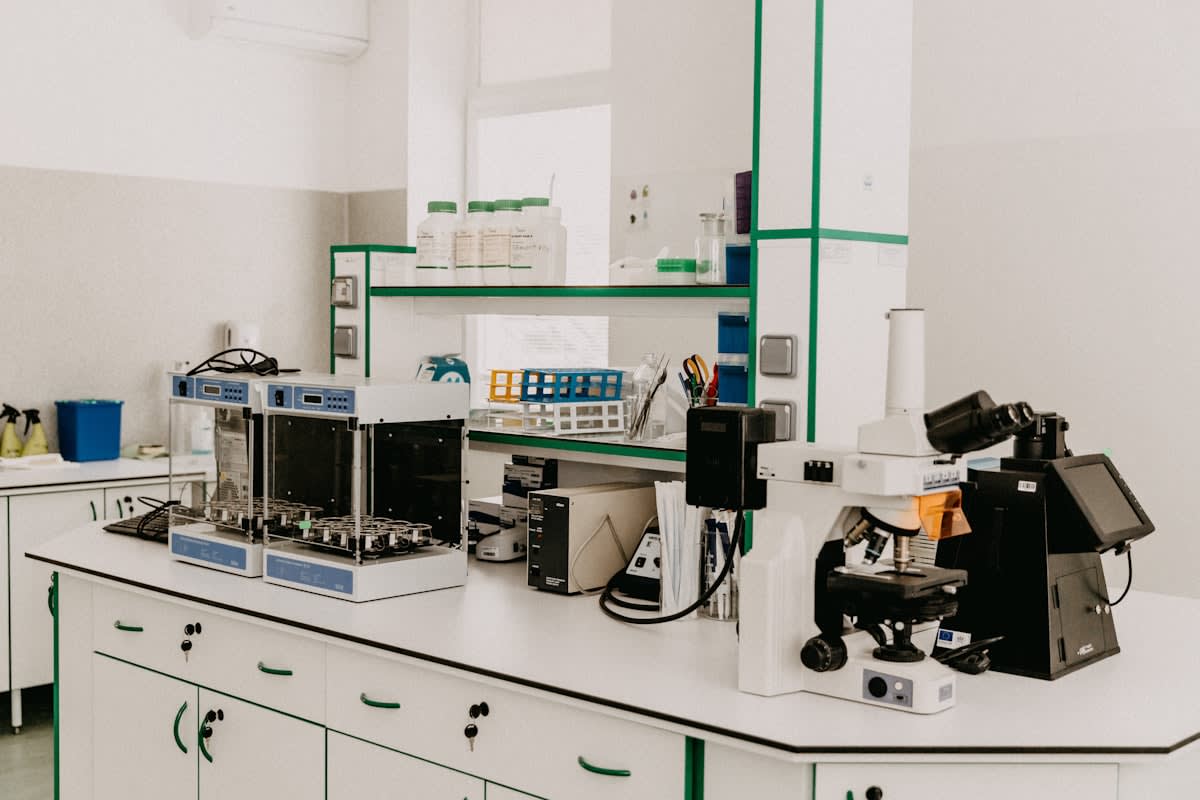
Does this mean the end of the wet lab? Hardly. But it changes the lab's purpose. The laboratory is no longer the place where we search for the answer; it is the place where we verify the AI's hypothesis. This drastically reduces the cost of failure. Instead of testing 10,000 molecules to find one that works, scientists may now test ten molecules, knowing that the physics-based model has already eliminated the 9,990 that would have failed. This is the quiet end of trial-and-error medicine.