
Why do most investors treat their local currency as a safe harbor when it is often the greatest single point of failure in their financial life? For too long, the conventional wisdom has been to save in the currency of one's birth. But for anyone living in a region where monetary policy is a tool for political survival rather than economic stability, this is a gamble. A sovereign portfolio isn't about hoarding gold in a basement or hiding cash in a mattress; it is a strategic decoupling of your labor's value from the whims of a single government. I have spent over a decade helping clients move from fragility to resilience, and the core realization is always the same: true wealth is measured by purchasing power, not by a number in a local bank account.
The Prerequisites: Your Sovereign Toolkit
Before you move a single cent, you need the right infrastructure. You cannot build a global portfolio using local tools. Most people fail here because they try to diversify their assets while keeping their custody in the same jurisdiction they are trying to hedge against. That is like buying a fireproof safe but keeping it inside a burning building. To operate as a sovereign investor, you need a baseline of legal and digital readiness that allows you to move capital without friction.
- A valid, up-to-date international passport from a recognized jurisdiction.
- A secure, hardware-based encrypted vault for digital keys and sensitive documents.
- A basic understanding of the Common Reporting Standard (CRS) and how your home country shares data with foreign tax authorities (Source: OECD, 2023).
- A diversified set of legal identities or entities (e.g., an LLC or Trust) to separate personal liability from asset ownership.
- Access to a multi-currency brokerage or a neo-bank that allows for non-local currency holdings.
Step 1: Auditing Your Currency Dependency Ratio
The first mistake I see is the 'illusion of diversification.' An investor might own local stocks, local real estate, and a local savings account, thinking they are diversified. In reality, they are 100% exposed to the local currency. If the currency drops 30% against the USD or EUR, the value of those local assets in global terms plummets, even if the local price remains stable. You must calculate your Currency Dependency Ratio (CDR)—the percentage of your total net worth denominated in your home currency.
- List every asset you own, including real estate, pensions, and cash.
- Convert the value of each asset into a stable global benchmark, such as the US Dollar or a basket of G7 currencies.
- Divide your local currency holdings by your total global net worth.
- Identify the 'Danger Zone': If your CDR is above 60%, you are highly vulnerable to local monetary shocks.
- Set a target CDR (usually 20-30% for those in volatile regions) and create a migration plan to reach it.
Once you see the number, the urgency usually kicks in. I remember a client in Southeast Asia who thought he was wealthy because his local property portfolio had tripled in nominal terms. However, when we ran the CDR audit, we found that his purchasing power in terms of imported goods and international travel had actually stayed flat because the local currency had depreciated in tandem with the property price increase. He wasn't gaining wealth; he was just running to stay in the same place.
Step 2: Layering Hard Assets and Global Reserves
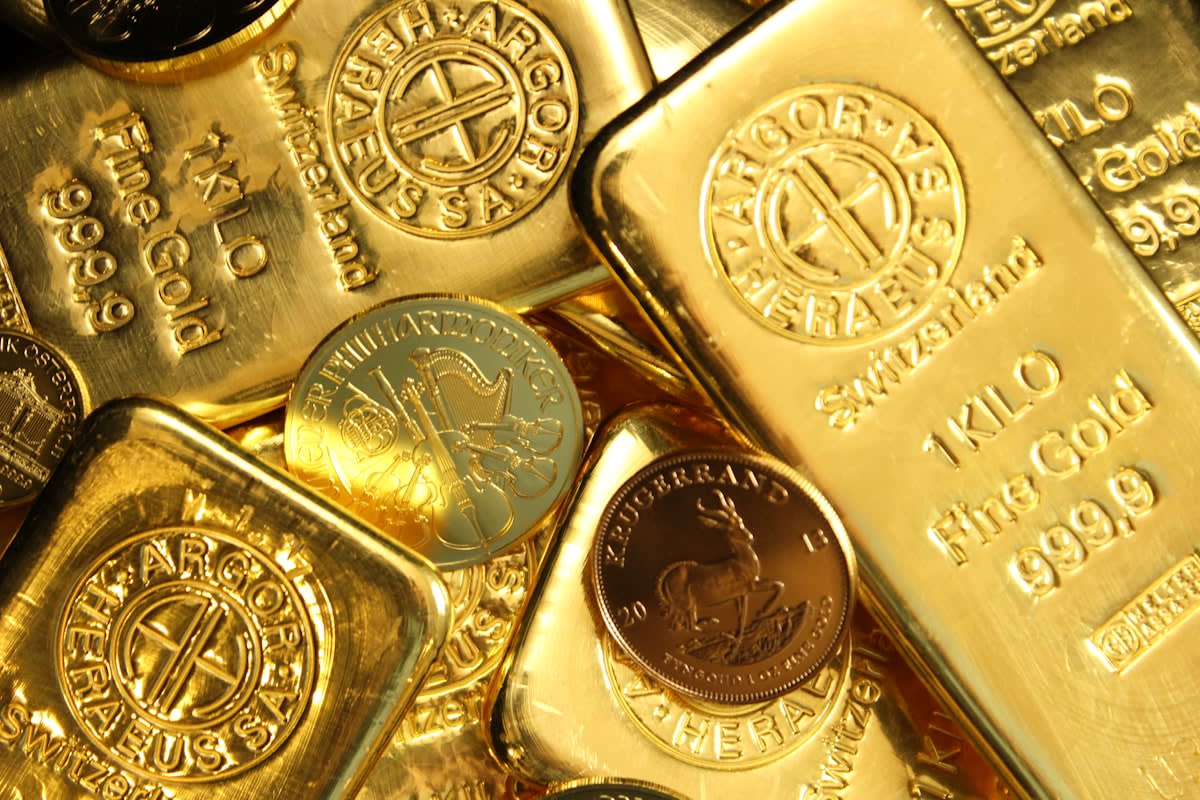
A sovereign portfolio relies on 'hard' assets—things that cannot be printed into oblivion by a central bank. Gold remains the ultimate insurance policy. According to the World Gold Council, central banks globally have increased their gold reserves significantly as a hedge against geopolitical instability (Source: World Gold Council, 2023). If the institutions managing the world's money are hedging with gold, why aren't you? But gold is just the floor. To build actual wealth, you need productive assets in stable jurisdictions.
| Asset Class | Role in Portfolio | Liquidity | Primary Risk |
|---|---|---|---|
| Physical Gold | Insurance/Tail-Risk Hedge | Medium | Storage/Security |
| Global Index Funds (USD/EUR) | Growth/Purchasing Power | High | Market Volatility |
| Foreign Real Estate | Cash Flow/Hard Asset | Low | Jurisdictional Law |
| Bitcoin/Digital Gold | Asymmetric Upside/Censorship Resistance | Very High | Volatility/Key Management |
The goal here is to create a 'ladder' of liquidity. You keep enough local currency for 3-6 months of expenses, a layer of highly liquid global reserves (USD/EUR/CHF) for mid-term needs, and a foundation of hard assets for long-term preservation. This structure ensures that you are never forced to sell your long-term hedges during a temporary market dip just to pay for groceries.
"The fundamental goal of wealth preservation in an era of fiscal dominance is not to 'beat the market,' but to ensure that your standard of living is independent of the failures of any single state actor."— Institutional Perspective, IMF Working Paper on Global Financial Stability (Paraphrased), 2022
Step 3: Establishing Offshore Infrastructure
Diversification of assets is useless without diversification of custody. If all your 'global' assets are held in a brokerage account in your home country, you are still subject to local capital controls. I have seen governments freeze outbound transfers in a matter of hours during a currency crisis. To be truly sovereign, you must move your custody offshore. This doesn't mean hiding money in the Caribbean; it means using jurisdictions with a strong rule of law and a history of protecting property rights.
From a practitioner's perspective, this is where the real friction happens. The debate among wealth managers usually centers on the trade-off between 'ease of access' and 'jurisdictional safety.' Some argue for the simplicity of US-based brokerages, while others insist on the neutrality of Singapore or Switzerland. On the ground, the challenge is often the KYC (Know Your Customer) process. When a local economy begins to destabilize, offshore banks often tighten their requirements for new accounts from that region. The window of opportunity to move custody closes exactly when you need it most. You must build these bridges while the sun is shining.

Step 4: Integrating Digital Assets as a 'Pressure Valve'
Bitcoin and other decentralized assets serve a unique purpose in a sovereign portfolio: they are the only assets that require no third-party permission to move. In a scenario where banks are closed and airports are restricted, a seed phrase is the only portable wealth that exists. While the volatility is high, the correlation to local currency crashes is often inverse. According to data from Chainalysis, crypto adoption spikes in regions with high inflation, as citizens seek a 'digital exit' from failing monetary systems (Source: Chainalysis Geography of Cryptocurrency Report, 2023).
I advise my clients to treat digital assets as a 'pressure valve.' You don't need 50% of your portfolio in Bitcoin, but having 5-10% provides an asymmetric hedge. If the global system remains stable, the upside is significant. If the local system collapses, the ability to move value across a border in seconds, without a bank's approval, is priceless. The key is self-custody; if you leave your assets on an exchange, you have simply traded one central point of failure for another.
Common Pitfalls to Avoid
The road to sovereignty is littered with expensive mistakes. The most common is the 'Get Rich Quick' offshore scheme. If a fund promises 15% guaranteed returns in a 'stable' offshore currency, it is almost certainly a Ponzi scheme. Real wealth preservation is boring. It is about low-cost index funds, physical gold, and legal structures that minimize tax leakage without breaking the law.
- Confusing tax avoidance (legal) with tax evasion (illegal). Always consult a cross-border tax specialist.
- Over-diversifying into too many obscure assets, which increases management complexity and fees.
- Ignoring the 'exit cost' of assets like real estate, which cannot be liquidated quickly during a crisis.
- Trusting a single 'trusted advisor' with total control over your offshore structures.
Fact-Check & Accuracy Note
This guide relies on data regarding global gold trends from the World Gold Council (2023), regulatory standards from the OECD (2023), and adoption trends from Chainalysis (2023). While the strategies discussed are based on established financial principles of diversification and jurisdictional hedging, the effectiveness of any portfolio depends on the specific legal framework of the user's home country. There is an ongoing debate among economists regarding the long-term stability of digital assets compared to traditional hard assets.